
LBFILM / MATERIAL GUIDE
TPU color PPF combines a new vehicle color with paint protection in one film system. It is an option for owners who want to change their car’s appearance while adding a protective layer, and for installers looking to offer more than a cosmetic color change.
TPU means thermoplastic polyurethane. Color PPF is colored paint protection film built around a TPU layer, with a surface coating and adhesive. It differs from a conventional PVC vinyl wrap in material construction and intended protective function. The exact specification matters more than the word “TPU” alone.
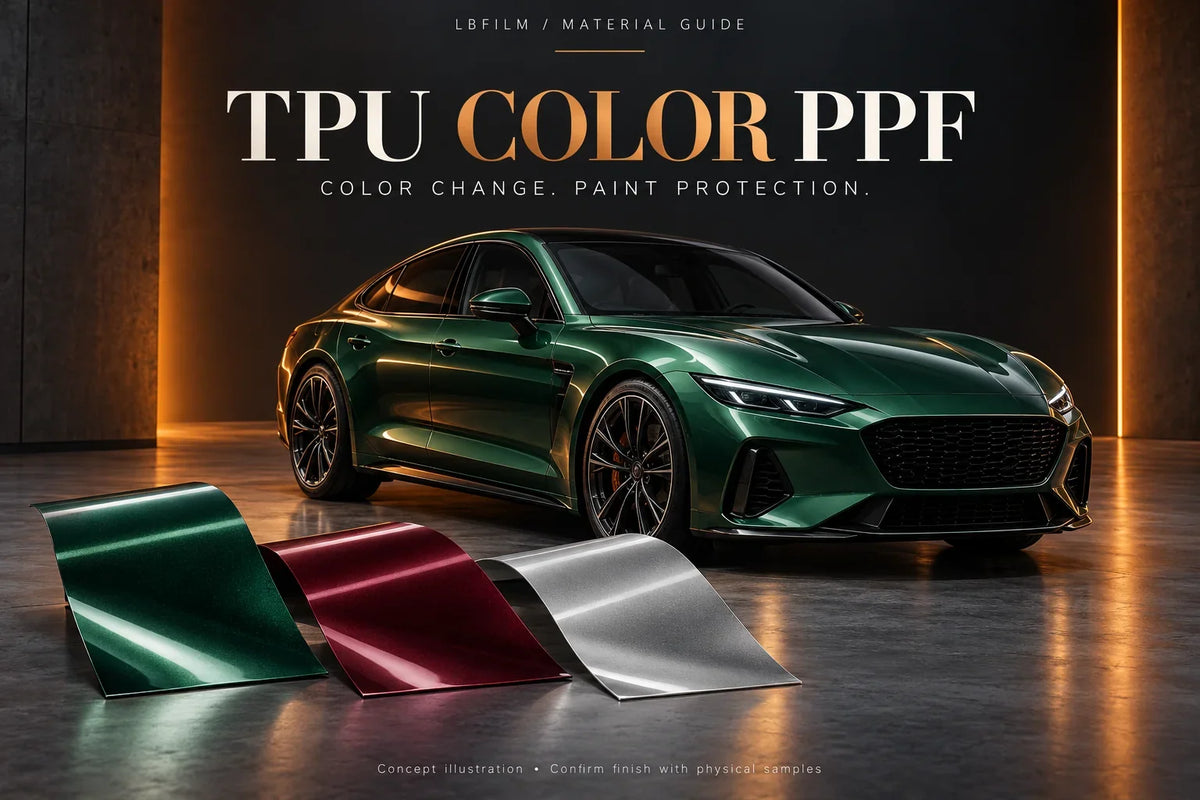
Cover: AI-generated concept illustration. The vehicle and swatches are not photographs of specific LBFILM colors; confirm the finish with physical samples.
How does TPU color-change film work?
A finished automotive film is a system, not just a sheet of raw polymer. LBFILM’s TPU Color PPF technical data sheet describes a hard coating, colored TPU film and acrylic pressure-sensitive adhesive, supplied with a temporary protective film and release liner.
The layers perform different jobs. The coating contributes surface appearance, stain resistance and heat-assisted scratch recovery. The colored TPU layer provides the color effect, conformability and impact absorption. The adhesive bonds the film to properly prepared automotive paint. Protective films and liners support handling; they are not all part of the finished installed thickness.
TPU is also used across the wider paint-protection industry. Covestro’s technical announcement describes TPU grades developed for PPF. This is background on the material category, not a statement about LBFILM’s raw-material supplier.
TPU color PPF vs. PVC vinyl wrap: which should you choose?
Start with the purpose of the project. A vehicle owner looking for a visual refresh may have different requirements from someone seeking a color change and paint protection together.
| Decision | TPU color PPF | PVC vinyl wrap |
|---|---|---|
| Main purpose | Color change combined with paint protection. | Vehicle restyling, color changes or compatible custom graphics. |
| LBFILM material | Colored TPU with a coating and adhesive system. | Polymeric calendered PVC in the published vinyl range. |
| What to verify | Installed construction, coating performance, installation method and warranty. | Finish, conformability, application suitability, removal conditions and warranty. |
| Best starting point | A physical sample and the exact PPF SKU’s technical sheet. | A physical sample and the exact wrap series specification. |
Neither label is enough to establish a universal lifespan or price. Do not assume that vinyl provides the same impact protection as a specified PPF, or that every TPU product has identical coating performance. Compare LBFILM color PPF and LBFILM vinyl wrap against the actual job.
What the LBFILM TPU color PPF data sheet tells you
The published English sheet, LB-TDS-CPPF-EN, Rev. 1.2, September 2026, gives a TPU-plus-hard-coating thickness range of 145–195 μm. That is a named layer measurement, not the thickness of the complete supplied roll including liners. The sheet separately lists temporary protective-film thickness.
It also describes heat-assisted scratch recovery. This should not be read as a promise that cuts, punctures or deep damage will disappear. A laboratory test condition is not a home-care instruction: do not reproduce hot-water or heat-gun testing on a vehicle. Ask the installer how marks should be assessed and treated for the selected film.
The document explicitly treats values as typical or model-specific and notes that results can vary with color, batch, substrate and test conditions. Request written confirmation of your SKU’s specification before purchasing. Use the technical document library to compare like-for-like measurements rather than choosing on one headline number.
How to choose a color and compare quotes
Check the finish on a curved sample
Evaluate the sample outdoors and indoors, then compare it with the car’s wheels, trim and original paint. Metallic effects and reflection clarity can change with viewing angle. A screen image is useful for narrowing the direction, but should not be the final color approval.
Material and finish are separate decisions. If you are considering a black build, our matte, satin and gloss black wrap guide explains how the appearance changes. Confirm which finishes are available in the particular TPU range you intend to order.
Give every installer the same project brief
Include the vehicle model and year, paint condition, preferred color, panels to cover and your location. Ask whether the quote includes preparation, removal of old film, edges, door jambs, installation and taxes. A full exterior color change does not automatically include every painted surface inside an opening.
For a distributor or installation studio, separate material supply from installation pricing. Request current roll dimensions, sample availability, batch information, lead time and relevant supply terms. The price of a film roll is not the cost of a completed vehicle installation.
Installation, aftercare and warranty checks
LBFILM’s published sheet calls for a clean work area and fully cleaned, decontaminated paint. It recommends an installation environment of 15–25°C and avoiding washing and prolonged rain exposure during the first week. Confirm the latest instructions with your installer for the exact product and local conditions.
Have repainted, chipped or otherwise compromised panels inspected before installation. Film is not a repair for failing paint. Ask the installer to record existing concerns and explain the implications for adhesion and later removal.
Keep the invoice, film identification and batch details. Before installation, ask LBFILM about warranty coverage and registration requirements for the exact product and your market. Confirm eligibility, exclusions, duration and the claims route in writing.
Frequently asked questions about TPU color PPF
Is TPU color PPF the same as clear PPF?
Both can use TPU-based protective film systems, but colored PPF changes the visible color. Clear PPF is chosen when retaining the underlying paint color is part of the brief. Their exact constructions and specifications may differ.
Does “color change” mean the film changes color automatically?
Here it means changing the vehicle’s appearance by applying a colored film. It does not imply temperature-responsive, electrically switchable or color-shifting effects. Ask for the precise finish description.
Is TPU color PPF scratch-proof?
No. A protective film can still be damaged. LBFILM describes heat-assisted surface scratch recovery under specified test conditions; that is not a guarantee against every scratch or impact.
How long does TPU color PPF last?
There is no single duration that applies to every product and climate. Check the chosen SKU’s warranty, exposure limits and care requirements. Do not substitute a different brand’s warranty or a general material claim.
Can I order samples before choosing a roll?
LBFILM’s sample program includes colored TPU PPF. Share your country, business type, preferred finishes and expected quantity so the team can confirm suitable current samples and terms.
Choose the material behind your next color change
Start with a sample, the current technical sheet and a clearly defined project. LBFILM can discuss color PPF selection for vehicle projects, installation studios and distribution enquiries.
By LBFILM · Published October 30, 2026. Based on the LBFILM technical sheet and product pages linked above. This is a product-selection guide, not an independent comparative laboratory test. Confirm current specifications, availability and warranty for the exact film ordered.