
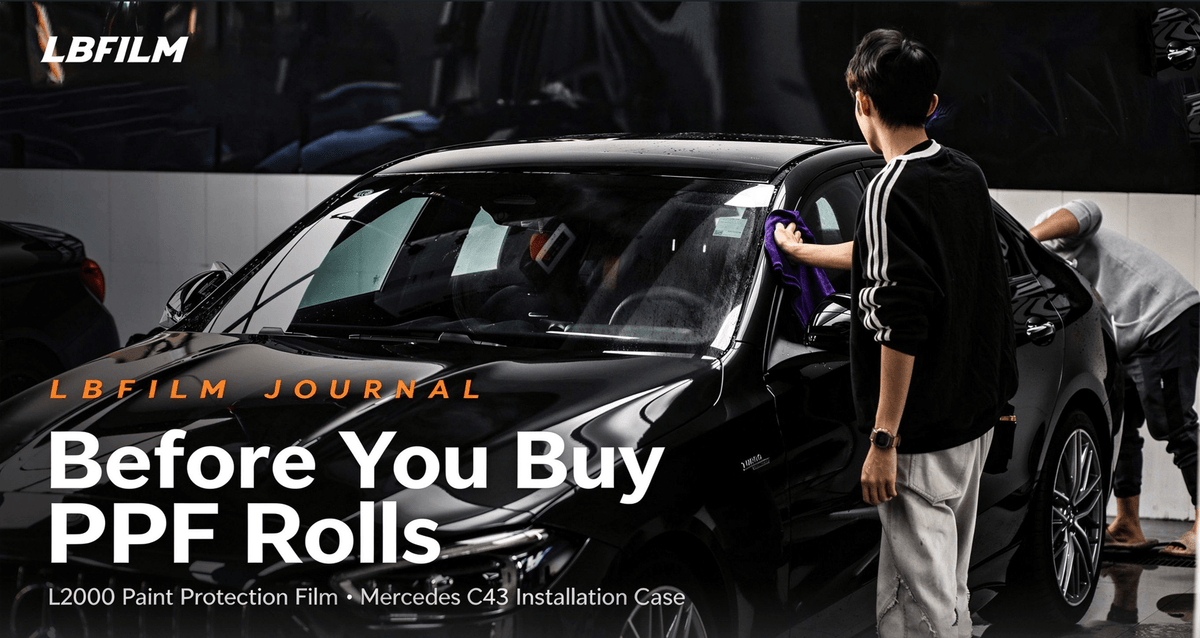
A paint protection film sample gives a workshop something practical to evaluate before ordering rolls: how the material handles, how it fits the intended application, and what the finished installation looks like after a follow-up check.
At LBFILM, an L2000 installation on a Mercedes C43 in Guangzhou offers a useful example of the details worth recording. This was a vehicle installation, rather than a controlled sample test. Here, we use its installation notes and reported follow-up findings to help workshops plan their own sample evaluation.
The project at a glance
- Film: LBFILM L2000 paint protection film
- Vehicle: Mercedes C43
- Location: Guangzhou, Guangdong, China
- Installation date: October 18
- Follow-up: Approximately two weeks after installation

1. Know exactly which film you are evaluating
Start by recording the product series and intended application. For this project, the film was L2000. When requesting a sample, confirm that it represents the product you are considering for your workshop, and ask for its current specifications and installation guidance.
Keep the sample label with your notes. If you compare several films, use a separate record for each one. This makes it easier to connect an installer's observations to the correct product when discussing a future order.
2. Record the application process, not just the finished appearance
The project photographs show clear film being positioned across the hood, followed by squeegee work during wet application. These process images provide context that a finished-car photograph alone cannot offer.
For your own evaluation, note the surface preparation, application conditions and methods used. Ask the installer to record how positioning and finishing felt on the chosen panel, including any areas that needed extra attention. These are observations to discuss with the supplier, rather than numerical performance ratings.

3. Pay attention to tight corners and recessed areas
The key installation note from this C43 project was to leave a small allowance when working around tight, hard-to-reach corners. This detail deserves a place in the evaluation record because a flat sample cannot show every challenge found on a vehicle.
No specific measurement was recorded for that allowance. Treat it as a project-specific installer observation, and confirm the appropriate approach for the particular panel and film. Photograph the relevant area during installation and again at the follow-up so the team can compare the same detail.

4. Include a follow-up inspection
According to the project information supplied by LBFILM, a follow-up approximately two weeks after installation found:
- No obvious edge lifting.
- No obvious dust specks.
- No obvious bubbles or wrinkles.
These findings describe the reported visual condition of this installation at that time. They do not establish long-term durability or guarantee the same result on every vehicle. The photographs in this article document installation; they are not photographs of the follow-up inspection.
For a workshop evaluating samples, the useful habit is to schedule a return check and record what is actually visible. Keep the inspection date, photographs and observations together, including any issues that need further attention.
A practical record for your next PPF sample
Before deciding whether to order rolls, build a simple evaluation record:
- Product identity: Series, sample label and batch details if available.
- Application: Vehicle or test panel, surface preparation and working conditions.
- Installer observations: Positioning, squeegee work and areas requiring extra care.
- Detail photographs: Corners, recesses and edges relevant to the application.
- Follow-up: Inspection date and any visible lifting, contamination, bubbles or wrinkles.
- Purchase details: Confirmed specifications, roll options and applicable supply terms.
The C43 case provides a starting point for this process. Your own sample evaluation should reflect the vehicles, working methods and finish expectations of your workshop. A short visual inspection and a hands-on trial can inform that decision, while longer-term performance questions require separate evidence.
Request an L2000 evaluation sample
Interested in evaluating L2000 before a larger order? Contact LBFILM customer service to confirm the sample details and shipping arrangements. L2000 evaluation samples can be requested with shipping paid by the applicant.
Explore sample requests or contact our team to discuss your workshop's needs.